Definition of specialty coffee
The term “specialty coffee” first appeared in 1974 thanks to Erna Knutsen, who described exceptional lots grown in unique microclimates. Today, “specialty” refers to coffee with distinct attributes and added market value (under the SCA’s updated value assessment approach), created through care at every stage — from farm to cup. See the Coffee Value Assessment (CVA) and the official news about the adoption of CVA standards (SCA-102/103/104-2024): SCA article.

Evaluation criteria and the role of Q Graders
“Specialty” is, first and foremost, a quality category. Historically, the benchmark has been a score of 80+ out of 100 (provided green samples meet defect requirements), confirmed by certified Q Graders. Within the CVA framework, the SCA updated cupping standards and evaluation tools in 2024.
- Sensory attributes: aroma/flavor, aftertaste, acidity, body, balance, and more. See the CVA Cupping Score Calculator and the course CVA for Cuppers.
- Green grading (350 g sample): 0 category 1 defects and no more than 5 category 2 defects. Details are in the SCA Coffee Standards (PDF).
- The CQI Q Coffee™ system (Q Arabica / Q Robusta) confirms Specialty/Fine status; a Q Grader license is valid for 36 months and requires calibration. See Q Coffee™ and Q Grader Exams & Calibrations.
High-altitude cultivation and terroir
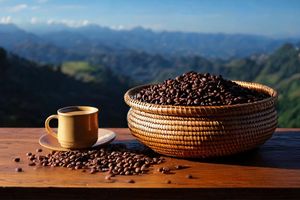
Higher elevation often correlates with greater bean density, brighter acidity, and a more complex profile, but it isn’t a hard requirement: variety, soil, climate, and processing also shape quality. So “2000+ m” is more of a trend than a rule.
Terroir — the interplay of altitude, soils, and climate — shapes a signature profile. For example, Ethiopian lots often offer citrus-floral notes, while Kenyan coffees are renowned for their berry-like acidity.
Absence of defects and picking methods
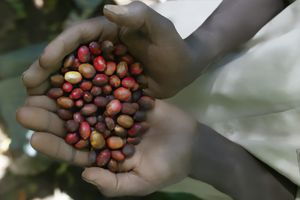
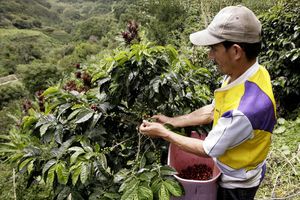
Selective hand-picking of ripe cherries and careful sorting reduce defects and boost lot uniformity. To qualify as “specialty,” green coffee is checked for defects in a 350 g sample (see SCA standards), and in the cup you can expect cleanliness and sweetness.

Third-wave culture and the role of cafés
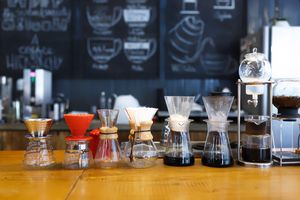
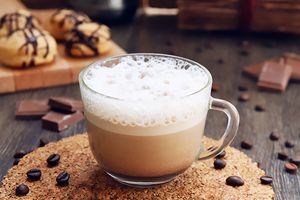
The spread of specialty culture is closely tied to third-wave cafés, where coffee is treated as a gastronomic experience: aroma, flavor, aftertaste, and mouthfeel are all considered. Sugar and syrups are more the exception than the rule here — the goal is to highlight the bean’s natural taste.
SCA and championships
The Specialty Coffee Association (SCA) serves as both standard-setter and advocate. The SCA supports standards, education, and global competitions together with World Coffee Events. Participation requirements are defined in current documents: Rules & Regulations — World Coffee Championships and 2025 WBC Rules (PDF). Competitors typically use specialty-grade coffee, but a minimum “SCA score” is not explicitly stated in the rules.
Summary: a culture of attentiveness
Specialty coffee is the product of collaboration among farmers, roasters, baristas, and consumers. Every step influences the taste and deserves thoughtful care. Next time you savor a cup, pause and try to pick out the notes — a whole world of specialty might just open up to you.
Continue your journey with our selection of specialty coffee beans.
See also
Frequently Asked Questions (FAQ)
- What is the minimum score required for specialty coffee?
- The benchmark is 80+ out of 100 (provided it passes green grading). In 2024, the SCA introduced the CVA — new cupping standards and evaluation tools.
- Can Robusta be specialty?
- Yes — there are Fine Robusta lots that reach 80+ and pass checks within the CQI system (Q Robusta).
- How should I store specialty coffee so it doesn’t lose flavor?
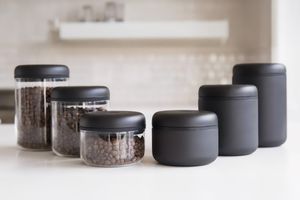
- Keep beans airtight, in a cool, dark place, and minimize contact with oxygen and moisture.
- Is the roast date important for specialty coffee?
- Yes. Most lots shine roughly 7–30 days after roasting (depending on roast profile and brew method).
- Where can I try specialty coffee in Ukraine?
- In third-wave cafés or by ordering a tasting set in our online store.